photo Screenshot2014-03-12at115230AM.png
Showing posts with label Humanity. Show all posts

Oradour-sur-Glane

11.21.2013

After a morning hike to the top of Saint-Cirq-Lapopie one last time, we packed up our camping gear and headed out to the next town. We stopped first at Peche Merle to see where the ancient Neanderthal drawings were, walked around the museum and then traveled to a town almost in the very middle of France called Oradour-sur-Glane. Mr. Finter and I love learning about history and World War II has held a very significant place in our hearts. Therefore, we made the stop earlier in our travels to Poland in order to visit Auschwitz and then decided we had to see this town in France as well. 

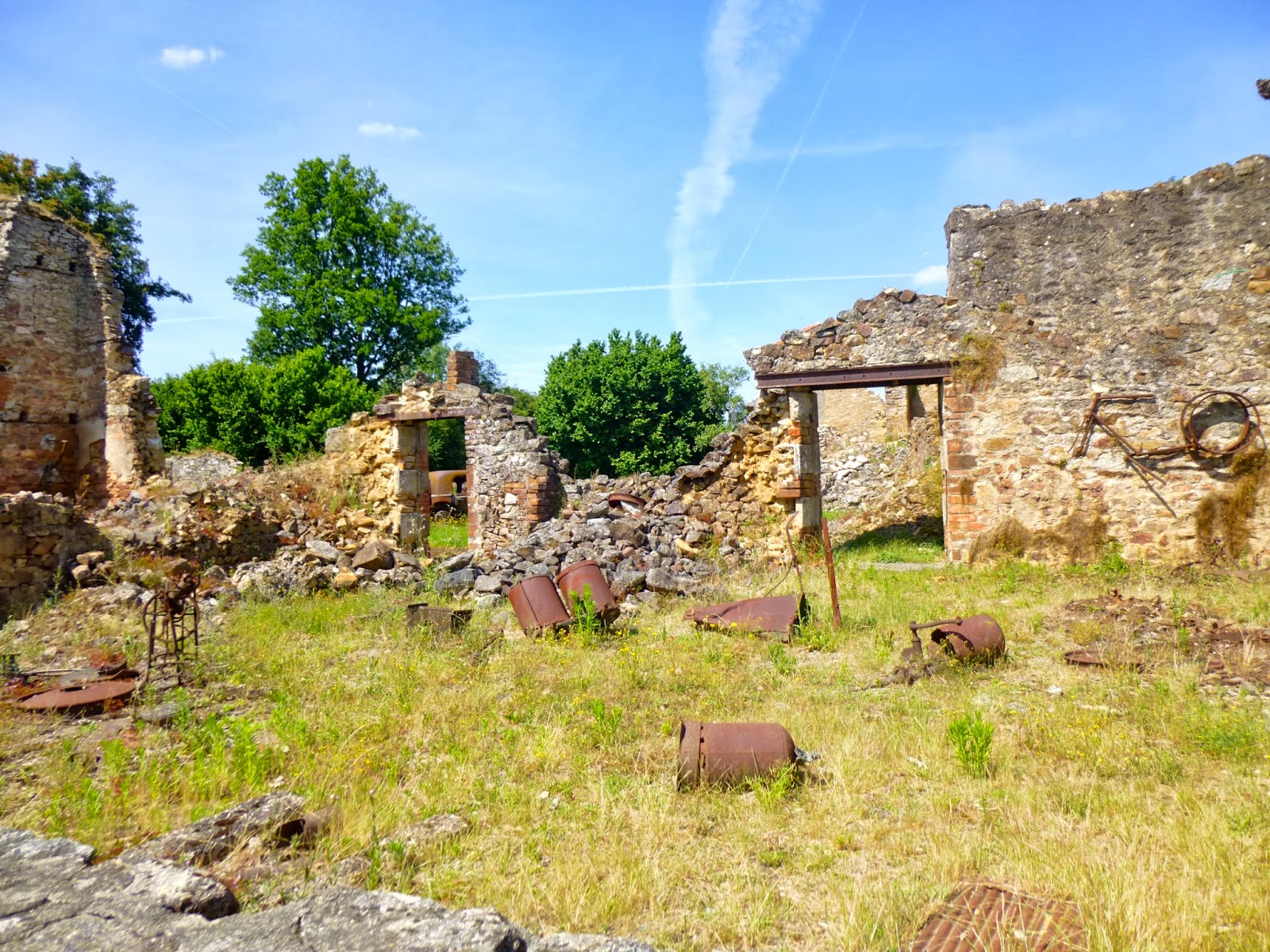
Oradour-sur-Glane is a quiet, small town of which only ruins are left after WWII. During the Vichy Regime in France, there had been some resistance to Nazi occupation and the Nazis chose this small town of which none rebelled or resisted to make an example of. They claimed, unfoundedly, that this town posed a great threat to the regime hiding weapons of war within and used propaganda to motivate and cover up the atrocity that happened here on June 10, 1944. On that day, a group of soldiers, the Der Führer regiment of the 2nd SS-Panzer Division Das Reich, surrounded the village, separated the men from the women and children, took the men to six buildings where they were all shot and took the women and children to the church where the soldiers let off a gas bomb that failed to work correctly forcing the soldiers to massacre the women and children with machine guns and grenades. Afterwards, they burned the entire village.

 "Only one person [of 642 men, women and children] managed to escape alive from the church and that was Madame Rouffanche. She saw her younger daughter who was sitting next to her killed by a bullet as they attempted to find shelter in the vestry. Madame Rouffanche then ran to the altar end of the church where she found a stepladder used to light the candles. Placing the ladder behind the altar she climbed up and threw herself through a window and out onto the ground some 10 feet below. As she picked herself up, a woman holding her baby tried to follow, but they were seen by the soldiers and both woman and child were killed. In spite of being shot and wounded five times, Madame Rouffanche escaped round the back of the church and dug herself into the earth between some rows of peas, where she remained hidden until late the next day." - Oradour-sur-Glane

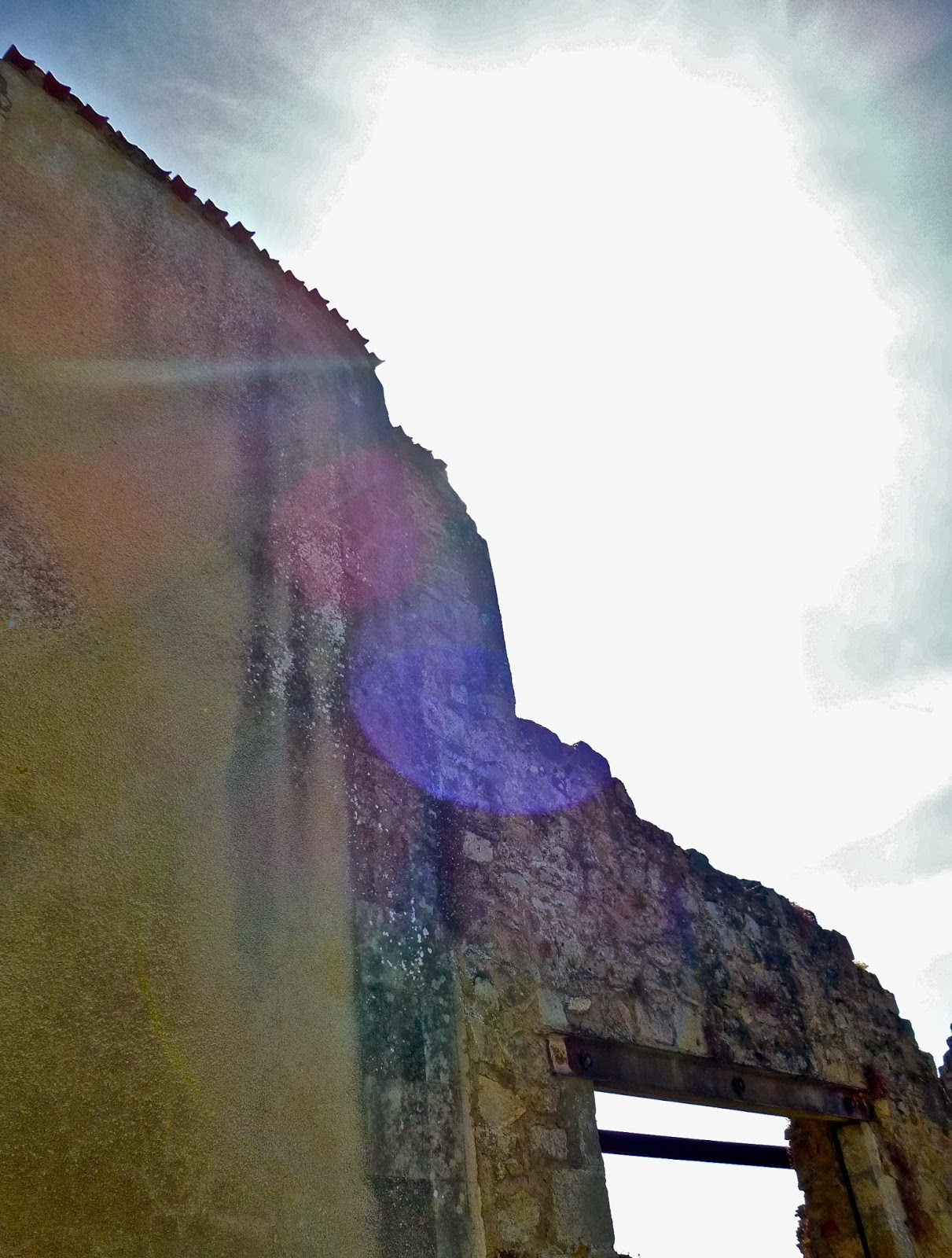
The town of Oradour-sur-Glane is perfectly preserved exactly how it was left after this horrid event. It remains to stand as a reminder of what humanity is capable of and what must never happened again. 


A Singer sewing machine.


A bread bakery.


The church.


Bullet holes in the walls.


"Souviens-Toi. Remember"

Remembering The Tragedy At Auschwitz

9.22.2013

Ever since I can remember I have loved and admired Jewish history. Not only is it precious to me because it is my faith and my people's history and thus a great part of who I am, but also it is a remarkable illustration of the resilience, strength and beauty of humanity. We took a great interest in war history after our marriage and began reading and watching documentaries of WWII while we were dating. When we began planning for our Europe trip, we knew that we had to visit Auschwitz. Our time there was incredibly sacred and life changing. 

Because we were only in Europe for a month we only had less than 24 hours to be in Poland. We arrived about 11pm to a small, dark, empty airport. The moment we grabbed our bags, our fellow passengers disappeared and all services at the airport closed. I had gathered information about how to get from the airport to our lodging online but it was the most stressful part of planning I experienced. Websites about the details of Poland for the most part are in Polish and translations of those sites are practically senseless. It was completely impossible! So I did as much research as I possibly could and we prayed everything would work out. We had four different options of getting to Krakow city center from Krakow Airport: A bus line that never came, a shuttle service that no one knew about a bus line that required tickets and a taxi service. Since the first two did not work out and the amount of people at the airport was dwindling fast (which made us very uncomfortable), we rushed to catch the other bus. We got polish cash, the smallest bills possible, at the ATM machine but the bus ticket machine refused to take them and the bus driver couldn't speak any English. The bus left and we were forced to take a taxi. We were really quite nervous about taking a taxi this late at night without speaking a word of Polish but we stayed calm and fought for a low price. Once everything was agreed, Landon followed us with his GPS to make sure we weren't kidnapped. The streets into town were dark. No lights anywhere. Street signs were in terrible condition and this central city was was relatively unstructured. We arrived to our lodging and were so grateful we were safe. 

Our lodging was an interesting experience too. The room we let was in an apartment next to a gay strip club and for a while we thought we might have to walk the street at night to find a safer place to stay. But it actually turned out to be safe and very comfortable. 


The next morning we got up early and went hunting for the bus to Auschwitz. No one spoke any English which made for a lot of walking in circles but we finally found our way.

The entrance to Auschwitz I "work makes one free."


The view towards heaven while entering hell.


A display of glasses taken from prisoners. 


Records.


Firing squad wall.


This was one of the first of the Nazi gas chambers. Smaller than the ones at Birkenau.


The second part of our day was at the Auschwitz II - Birkenau camp which is the second camp and larger camp build and involved more heavily in the Nazi's Final Solution. 

The famous train tracks.


All that remains of the largest gas chamber. The Nazis destroyed it before the war was over to hide what was really going on.


 A view of a guard tower.


Sleeping quarters. The barns were made to hold 50 horses but they kept 180 people. 


This is a cattle car used to drop off prisoners in the camp. It now stands as a monument to those who lost their lives in those cars and at the camp. We can't quite remember the stone's significance but we think they represent a pledge to never again let such a thing happen in human life. 


We thought that going to Auschwitz would be an experience of incredible sadness. While it was so hard to witness the horrors of these camps, the experience of being there actually was full of much more hope and amazement than we expected. We learned so much of the resilience of those kept prisoner in these camps and of their acts of sacrifice for others, demonstrations of faith and belief in a better future which will inspire us throughout our lives. I hope we can always remember the mistakes of this historical past and never again repeat them.

One of our favorite stories from the tour was of incredible sacrifice. In the Auschwitz I camp (which was for the stronger individuals and behaved more similar to a POW camp than Auschwitz II - Birkenau) the rule of the camp was that if someone had escaped while working, then another member of their work group was taken and thrown into a dungeon to starve to death. In this story, such an event had occurred and then man chosen at random to be thrown in the dungeon had a wife and children who were still alive. This man pled for his life and a beloved rabbi came forward offering to take his place. At this, and only at this time, the camp director let them make this switch. So the rabbi and a few other men were taken to starve. However, the man who was replaced by the rabbi survived Auschwitz and WWII and was reunited with his family.

 While waiting for our bus back to the airport we enjoyed some Polish dogs and a kiss of gratitude for a life much less difficult than that of the couples who lived in Auschwitz.